
I’ve been close to products that were genuinely ready to ship.
Not almost ready. Not “needs a few more weeks.” Ready. Real users waiting. Real problems to solve. A team that had put in months of honest work.
And I watched them stall.
Not because of a technical failure. Not because the market wasn’t there. But because of a set of invisible patterns inside the team — patterns that are surprisingly consistent across companies, industries, and stages.
I’ve seen an e-commerce brand lose an entire growth window to decision delays. I’ve been in rooms where a good product became a complicated product became an expensive internal exercise. I’ve seen teams go from motivated to burnt out without a single bad hire.
The patterns aren’t random. They’re predictable. And because they’re predictable, they’re preventable.
Here are five I’ve watched play out — and what to do instead.
Key Takeaways
- Products that are ready to ship usually stall because of predictable patterns inside the team, not technical failure or a missing market. Because the patterns are predictable, they’re preventable.
- Five patterns recur: product obsession without customer obsession, decision paralysis at the top, the bottleneck leader, perfectionism as the real blocker, and feature bloat.
- The fixes are behavioural: redirect product love toward how the customer feels, build a clear decision-making framework (who decides what, by when), delegate, launch intentionally, and ship the core.
- Two things consistently break the cycle: prepare for success, not just for launch (onboarding, support, a way to get unstuck), and get early feedback from one real client on one real project, fast.
- A delayed launch has a real, compounding cost in salaries, attention, leadership time and lost learning. Run the number, then make the call.
Pattern 1: Product Obsession Without Customer Obsession
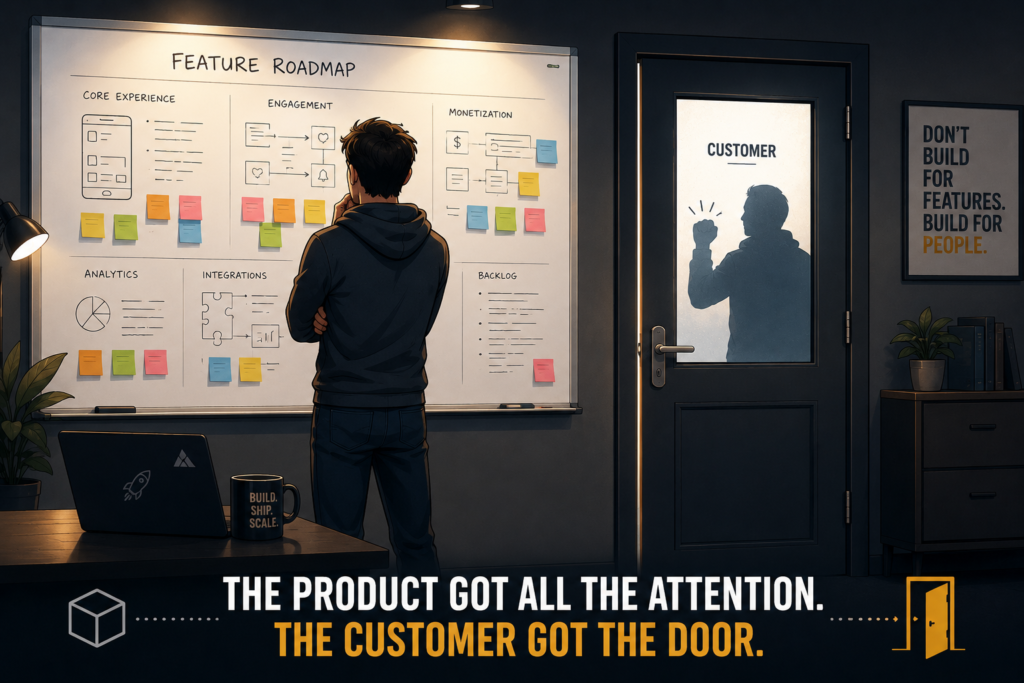
There’s a phase in every startup when the founder falls deeply in love with what they’re building. That love is the fuel — it’s what gets the product to exist at all.
But there’s a point where that obsession tips. The product stops being a means to an end and becomes the end itself. Features get added not because users asked for them, but because they feel satisfying to build. Comparisons get made to bigger, more established tools. The question shifts from “what does the customer need?” to “what should this product eventually be?”
The result: a product that impresses internally and confuses externally.
The reframe isn’t to love the product less. It’s to redirect that energy. The most product-obsessed founders I’ve seen succeed are obsessed with how the customer feels using their product — not with how many features it has.
Customer obsession and product obsession aren’t the same thing. The first scales. The second stalls.
Pattern 2: Decision Paralysis at the Top
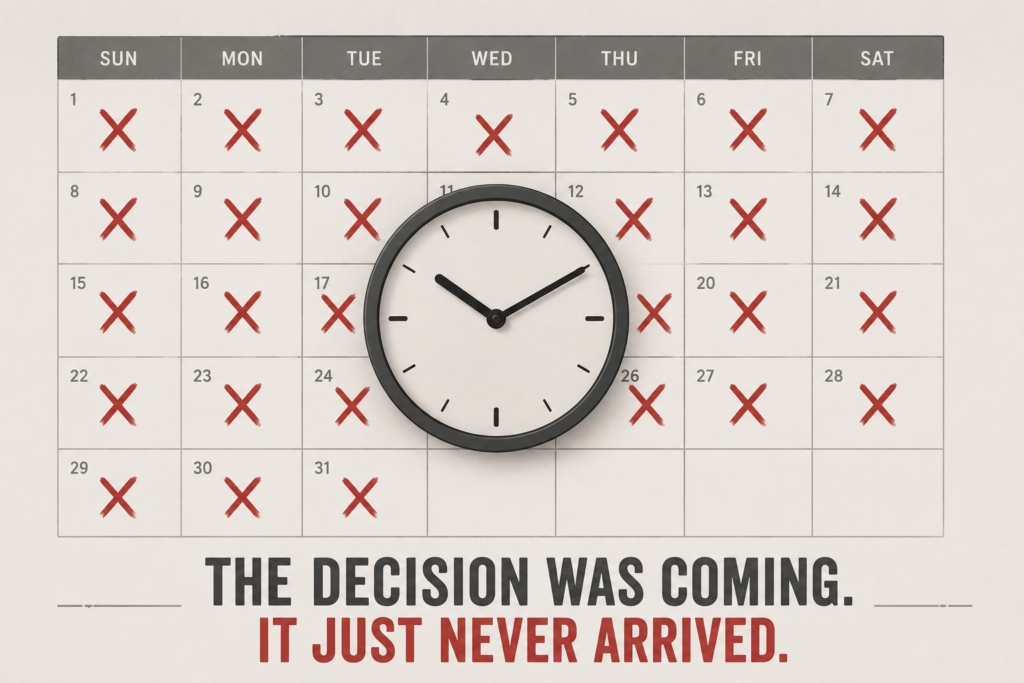
Commitments get made. Timelines get set. And then… nothing gets decided.
I’ve seen this with funding timelines, go-live approvals, and GTM sequencing. Someone at the top says “we’ll have X by [date].” The team builds toward it. And when the date arrives, the decision hasn’t been made — so nothing moves.
What makes this particularly damaging is that it’s invisible damage. The product doesn’t break. No one quits on day one. But momentum — which is the lifeblood of an early-stage team — quietly dies. I’ve watched the same thing happen outside product teams. In the C.R.A.W.L. Audit, the fix was clear and the upside was modelled. The decision still didn’t get made, and the opportunity shrank every month it waited.
Speed of decision-making is a competitive advantage. Not just externally (responding to market shifts), but internally. Every week a decision is delayed is a week the team has to hold two realities in their head simultaneously: the plan we committed to, and the uncertainty of whether it’s real.
The fix isn’t making faster decisions recklessly. It’s building a clear decision-making framework — who decides what, by when, and what information is actually needed before a decision can be made.
Pattern 3: The Bottleneck Leader
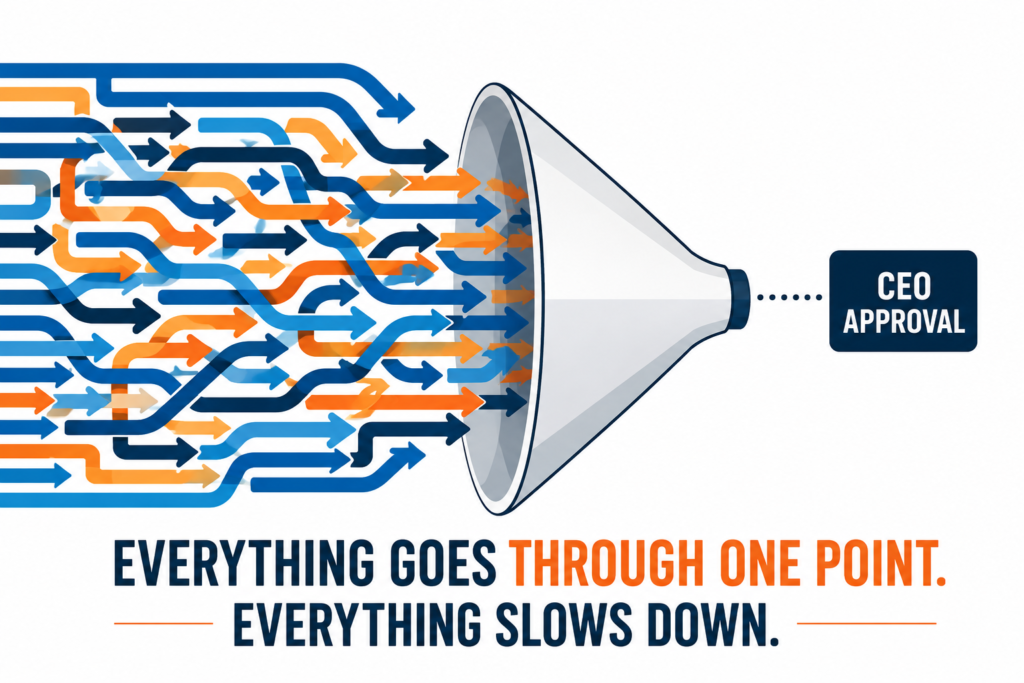
When a founder is present in every meeting, signs off on every decision, and codes, designs, reviews, and approves in the same week — it feels like commitment. From the outside, it looks like a leader who cares deeply.
From the inside, it looks different.
The team learns to wait. They stop making judgment calls because those calls have been taken back before. They stop moving on tasks because approval hasn’t come. They sit in meetings they don’t need to be in because the leader insists on being in all the same meetings. It shows up in product reviews too. When every correction arrives as a question, people stop offering their own judgment and start offering apologies. That’s why I now run reviews with Good, Fix, Add instead.
This isn’t a leadership failure. It’s a transition failure. Early-stage founders survive by doing everything. Scaling founders survive by building capacity in others. The trap is that the habits that worked at Stage 1 become the ceiling at Stage 2.
The measure of a great leader isn’t how much they’re involved. It’s how much moves without them. Delegation isn’t abdication — it’s the infrastructure of growth.
Pattern 4: Perfectionism as the Real Blocker
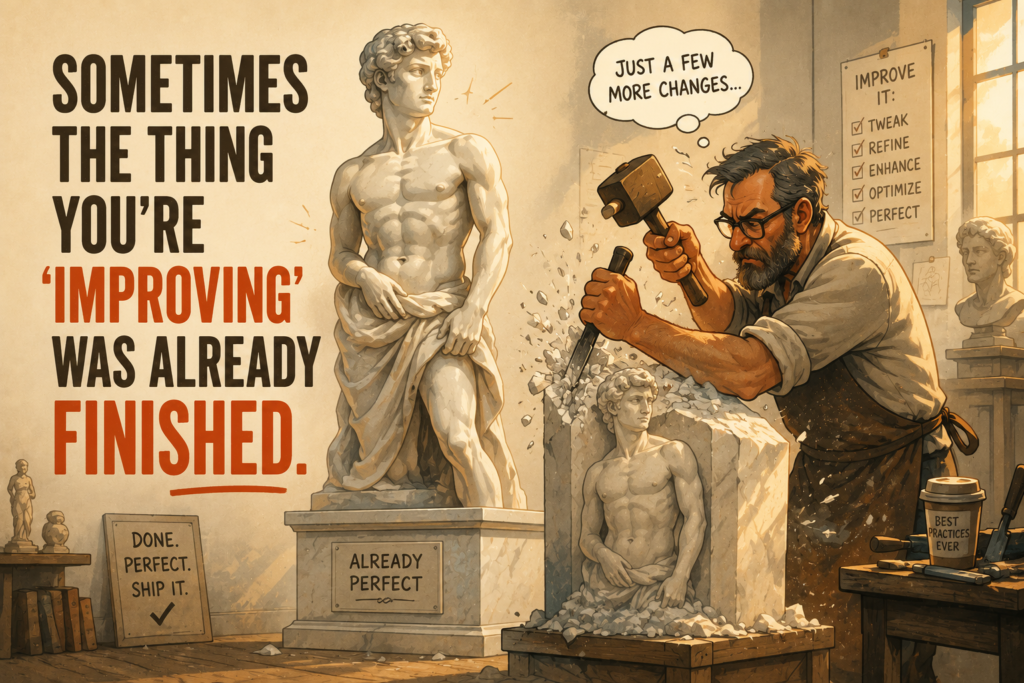
This one is the most seductive because it wears a virtue’s name.
Perfectionism sounds like high standards. It sounds like caring. And in small doses, it produces excellent work.
But I’ve seen perfectionism flag a bug in a legacy desktop calculator during a product review. I’ve seen it block a go-live because five pages out of two hundred weren’t fully built yet. I’ve seen it add features to a product that had no live users — features built to satisfy a hypothetical future customer, while real potential customers waited.
Here’s the truth: you cannot perfect a product in isolation. Real usage is the only mirror that shows you what actually needs fixing.
Every week a product sits unlaunched is a week of feedback you didn’t collect. A week of data you don’t have. A week of learning that can’t happen until the first real user touches it.
Done isn’t the enemy of good. Delay is.
Prepare thoroughly, launch intentionally — and then let the market tell you what comes next.
Pattern 5: Feature Bloat — When the Product Becomes a White Elephant

There’s a specific kind of product risk that sneaks up quietly: the product that has too many features to explain, too many modules to maintain, and no clear core that a new user can grab onto in the first five minutes.
It happens when features get added to solve problems no real user has raised yet. When the product starts trying to mirror what a much larger, established platform does — not because the users need that capability, but because it feels like the right level of ambition.
The irony is that feature-rich products often feel less valuable than focused ones. If you can’t tell me in one sentence what your product does and why I need it today, the product has too many things competing for that answer.
Constraint is a product strategy. Knowing what your product is not is as important as knowing what it is. Ship the core. Use real usage to justify what comes next.
What Actually Breaks the Cycle
If the five patterns above are the problem, there are two things I’ve seen consistently unlock progress.
Prepare for Success — Not Just for Launch

Most startup teams spend enormous energy preparing for a launch. They almost never prepare for what happens after it works.
What happens if 50 people sign up this week? Is there an onboarding flow? A Day 1 email? A way for someone to get unstuck without calling the founder?
What happens if the first real client runs into a problem mid-project? Who handles it? How fast?
I’ve written about this in more depth since, in why onboarding loses users before they ever see the product: if you don’t build the success infrastructure before launch, your early users become your first critics instead of your first advocates. And in a world where a single LinkedIn post from a frustrated user can define your product’s first impression — that matters enormously.
Prepare the win condition as carefully as you prepare the launch condition.
At a Glance: The 5 Patterns That Stall Products
| Pattern | What it looks like | What it costs | What to do instead |
|---|---|---|---|
| 1. Product obsession without customer obsession | Features added because they’re satisfying to build; comparisons to bigger tools | A product that impresses internally and confuses externally | Obsess over how the customer feels using it, not how many features it has |
| 2. Decision paralysis at the top | Dates committed, then nothing decided when they arrive | Momentum quietly dies; the team holds two realities at once | A clear decision-making framework: who decides what, by when, with what information |
| 3. The bottleneck leader | Founder in every meeting, approving everything | The team learns to wait and stops making judgment calls | Build capacity in others. Measure how much moves without you |
| 4. Perfectionism as the real blocker | Go-live blocked over 5 of 200 pages; features for hypothetical users | Every unlaunched week is feedback and data you didn’t collect | Prepare thoroughly, launch intentionally, let real usage show what to fix |
| 5. Feature bloat | Too many modules; no core a new user grasps in five minutes | Feature-rich products feel less valuable than focused ones | Constraint as strategy: ship the core, let usage justify the rest |
Take Early Feedback from Real Users — Fast

No amount of internal testing replicates what happens when a real user, with a real project, under real time pressure, uses your product for the first time.
The best thing you can do before a full launch is find one client, one project, and one real constraint — and run it live. Not as a pilot in a controlled environment. As actual work, with actual stakes.
What breaks will tell you more than six months of QA could. What surprises you will tell you what your users will value most. What they ignore will tell you what to cut.
Early feedback isn’t a risk to manage. It’s the data you’ve been building toward.
The Cost You’re Not Calculating
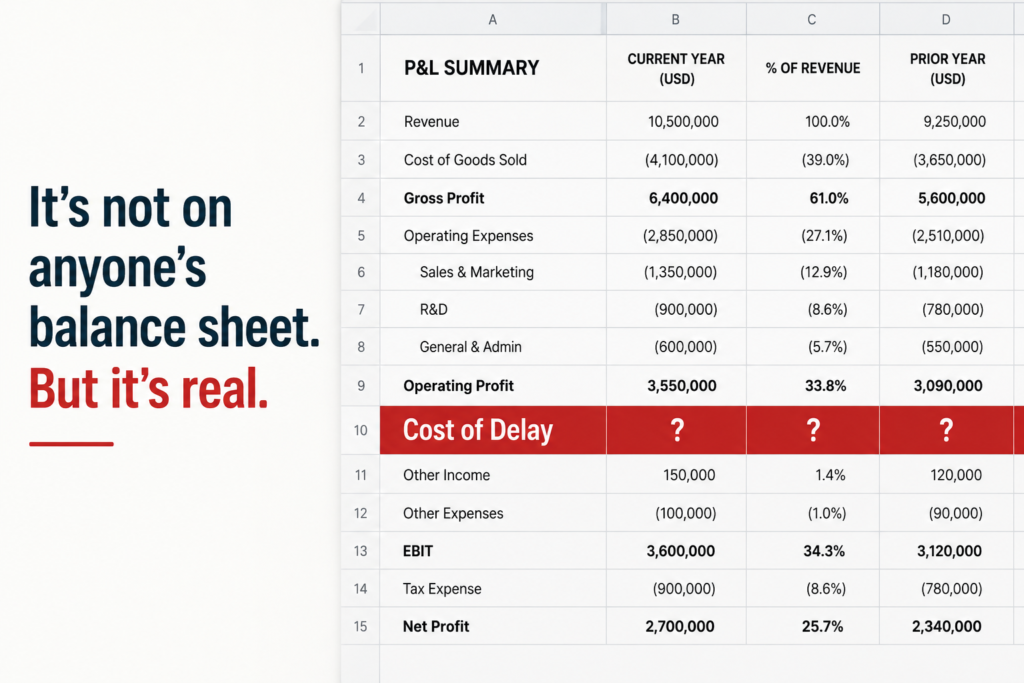
Here’s a number most startup teams never run:
What is the cost of delaying your own product’s launch by one week?
When teams evaluate buying an existing SaaS tool, they think carefully about the subscription cost. What they often miss is the adoption cost — the man-hours to trial, integrate, and train on a new platform. In enterprise contexts, that number can be $25,000–$35,000 before a single subscription dollar is spent.
The same logic applies to your own product. Every week of delay costs you developer salaries, team attention, leadership time, and the compound learning you can only get from live users. The “subscription cost” of your own product is zero — but the cost of not shipping it is very real, and it compounds every single week.
Delayed launch isn’t free. It’s just an invisible expense — the same cost of inaction I ask leadership teams to calculate in every growth audit.
Run the number. Then make the call.
Momentum Is a Choice
Great products don’t stall because they aren’t good enough. They stall because of patterns that compound quietly until the team is exhausted, the roadmap is bloated, and the original energy is spent.
The five patterns above aren’t signs of bad people or bad companies. They’re signs of energy that got directed at the wrong things.
Recognize them early. Name them honestly. And then redirect.
Momentum in a startup isn’t luck. It’s a set of daily decisions — to decide, to delegate, to ship, to listen. Make those decisions consistently, and the product that’s been ready will finally get the launch it deserves.
Frequently Asked Questions
Usually not because of a technical failure or a missing market. They stall because of patterns inside the team that compound quietly: product obsession that loses sight of the customer, decisions that don’t get made, a leader everything has to flow through, perfectionism, and feature bloat. These patterns are consistent across companies, industries and stages. That makes them predictable, and so preventable.
Product obsession treats the product as the end in itself. Features get added because they feel satisfying to build, and the question becomes “what should this product eventually be?” Customer obsession asks “what does the customer need?” and focuses on how the customer feels using the product. The first scales. The second stalls.
Not by making faster decisions recklessly. Build a clear decision-making framework: who decides what, by when, and what information is actually needed before a decision can be made. Every week a decision is delayed, the team has to hold two realities at once, the plan it committed to and the uncertainty of whether that plan is real.
In small doses it produces excellent work. It becomes a blocker when it stops a go-live because five pages out of two hundred aren’t finished, or adds features for a hypothetical future customer while real ones wait. You can’t perfect a product in isolation, because real usage is the only mirror that shows what needs fixing. Done isn’t the enemy of good. Delay is.
Prepare for what happens if it works. If 50 people sign up this week, is there an onboarding flow, a Day 1 email, and a way to get unstuck without calling the founder? If the first real client hits a problem mid-project, who handles it, and how fast? Without that success infrastructure, early users become your first critics instead of your first advocates.
More than most teams calculate. Every week of delay costs developer salaries, team attention, leadership time, and the compound learning you only get from live users. Teams weigh the subscription cost of a bought SaaS tool carefully but often miss the adoption cost, which can reach $25,000–$35,000 in enterprise contexts. The same blind spot applies to your own product: the cost of not shipping it is invisible, and it compounds every week.
About the Author
I’m Harish PS — a delivery-led digital transformation and MarTech leader with 26+ years of experience helping organisations modernise CRM, digital platforms, customer experience, and marketing operations at scale.
I’ve worked across agency, client, and advisory sides — in B2B SaaS, enterprise delivery, and early-stage startups. The patterns in this post come from real situations I’ve been close to, not case studies from a textbook.
I’m currently open to new opportunities. If you’re building something in these spaces and need a leader who can bridge product, delivery, and growth — I’d love to connect.
Roles I’m exploring:
- Director of Digital Transformation
- Director / Head of MarTech
- Director CRM / Customer Experience
- Director Digital Platforms
- Practice Director MarTech / Salesforce / Customer Transformation
- Director Revenue Operations
- Delivery Director / Program Director Digital Transformation
📩 Connect with me on LinkedIn or reach out at harish@psharish.com
By PS Harish
27 July 2026Comments
No comments yet.



Leave A Comment